
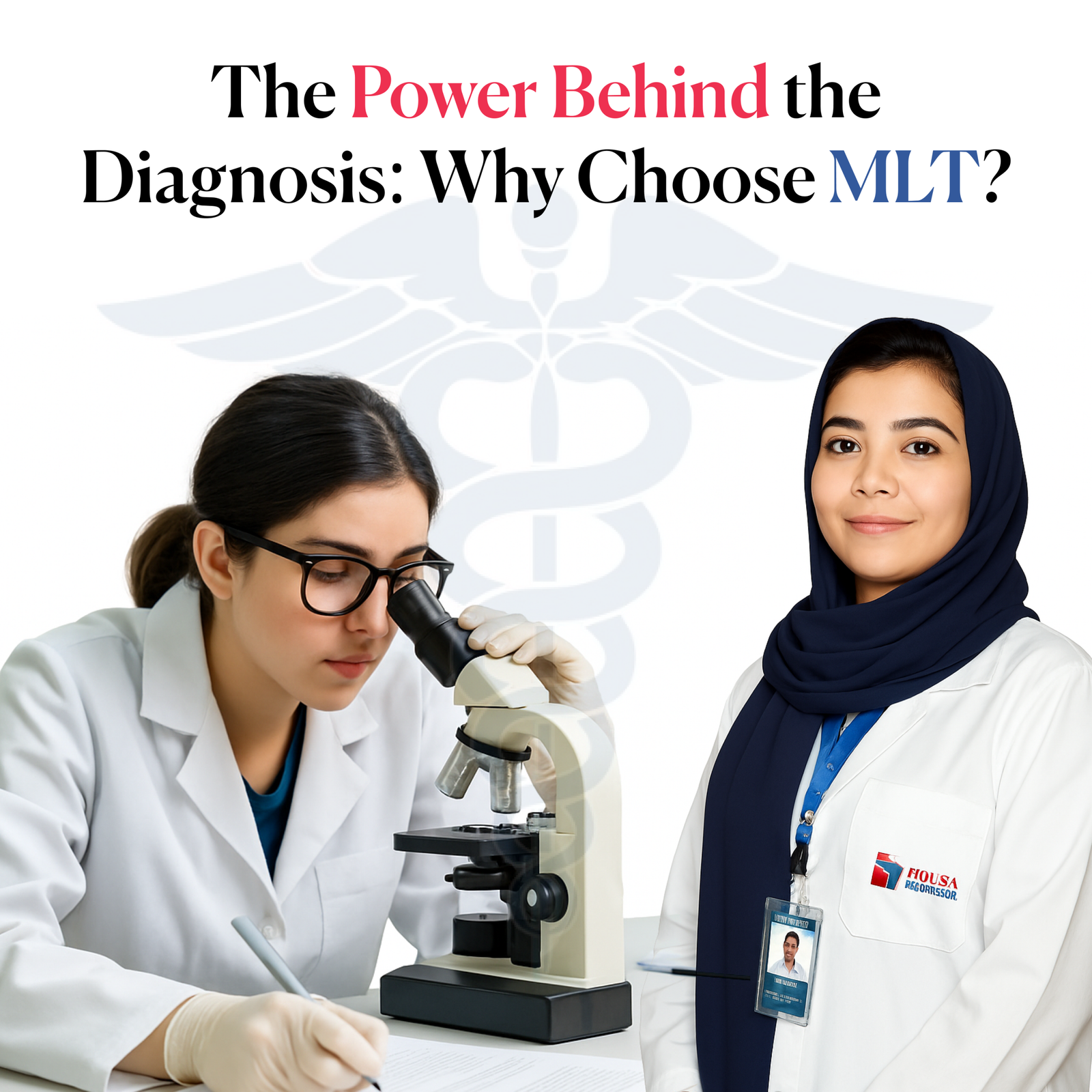
Medical Laboratory Technology (MLT) is one of the fastest-growing fields in healthcare, playing a central role in accurate disease diagnosis and patient care. With the rise of precision medicine, molecular diagnostics, and point-of-care testing, MLT professionals are becoming indispensable in modern hospitals, research centers, and public health systems.
When discussing the Scope Of MLT, it’s clear that the demand for skilled laboratory technologists is rapidly increasing worldwide. Their expertise supports disease prevention, outbreak response, therapeutic monitoring, and clinical decision-making, making MLT a cornerstone of both global and local healthcare delivery.
Innovations Driving Medical Laboratory Technology
Recent advancements are reshaping the profession and broadening the Scope of MLT :
-
Automation and Artificial Intelligence (AI): Modern lab automation systems and AI-driven tools are improving diagnostic accuracy, speeding up test results, and reducing human error, which directly enhances the Scope of MLT in clinical practice.
-
Molecular techniques: Advanced methods such as PCR, next-generation sequencing (NGS), and CRISPR are enabling early detection of complex diseases, genetic disorders, and emerging infections, further expanding the Scope of MLT in research and diagnostics.
-
Digital pathology and LIS: The adoption of digital pathology and laboratory information systems (LIS) allows seamless data storage, sharing, and analysis, highlighting the growing Scope of MLT in healthcare technology integration.
-
Point-of-care testing and mobile diagnostics: Portable diagnostic tools are making healthcare more accessible, particularly in rural and underserved areas, which widens the Scope of MLT beyond hospital-based laboratories.
These innovations are transforming MLT into a highly specialized field and positioning it as a driver of personalized medicine.
Challenges in Developing Countries
While the potential is immense, challenges remain in low- and middle-income nations:
- Limited funding and outdated infrastructure.
- Shortages of trained workforce and specialized equipment.
- Unequal access between urban and rural healthcare facilities.
Despite these hurdles, public-private partnerships, international support, and updated training programs are helping bridge the gap. With the right investments, MLT can reduce disease burdens and improve public health outcomes.
Local Perspective on Medical Laboratory Careers
In countries like Pakistan, the need for qualified medical laboratory technologists is rising in:
- Tertiary care hospitals
- Diagnostic laboratories
- Disease surveillance programs
Educational institutions are expanding their MLT programs, but disparities in curriculum quality, clinical exposure, and accreditation need attention. Continuous professional development is becoming essential as labs adopt automation and digital tools.
Future Scope of Medical Laboratory Technology
The future of MLT is promising, but professionals face several challenges:
- Workforce shortages and limited career progression.
- Rapidly changing technology that requires advanced training.
- Growing burden of infectious and non-communicable diseases.
Still, innovations in molecular diagnostics, AI-driven healthcare, and global accreditation standards are unlocking new opportunities. Investing in research, education, and policies will help strengthen this vital healthcare profession.
Conclusion
Medical Laboratory Technology is not just about diagnostics—it is the backbone of global health systems. From outbreak detection to precision treatment, the field continues to evolve with technology and global health priorities. With rising demand for skilled professionals, MLT offers one of the most promising career paths in healthcare today.